
My Gums Bleed, So Should I Stop Flossing?
Bleeding while flossing usually means there is a source of irritation present e.g., food particles, and stopping will only leave them in place because inflammation will not resolve until that source is removed.





Gums bleed, so people assume leaving it alone will fix the situation, or worse; bleeding was caused by flossing, which can happen if done incorrectly.
Why Bleeding Means You Should Keep On Flossing?
A food particle stuck between teeth is enough to inflame the gum, even after only a few hours, which can bleed if touched.
So if your gums bleed in one spot only, it needs to be cleaned properly, and stopping isn’t going to help your case.
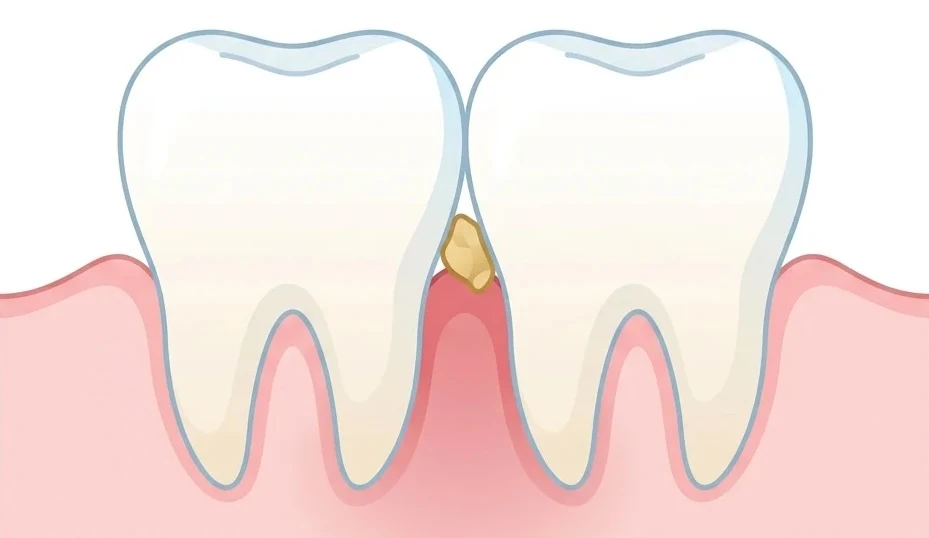
It would only mean the food remains stuck, inflammation never settles, and the next time you touch it, it bleeds again, which ultimately leads people to decide that flossing is the problem.
What People Actually Get Wrong
- The floss goes in, but the food stays, and inflammation never settles in the first place.
- The same dirty section is used on every gap, moving debris around the mouth instead of removing it, so use a fresh section each time.
- Floss, interdental brushes, and water flossers are different tools that practically do the same job, but have slightly different mechanics.
How Often Should You Floss?
At least once a day. Ideally after every meal, which is what I do myself.
Once a day is the minimum that keeps a gap from staying full for a whole day. After meals is better, because nothing sits there long enough to start the process off.
The Salt Rinse, and Who Should Not Use It
Alongside proper flossing, lukewarm water and salt rinses help settle inflammation, at least 3 times a day.
If you have a heart condition or high blood pressure, or you have been told to watch your salt intake, use plain lukewarm water instead and speak to your dentist or doctor beforehand.
The Time Bleeding Actually Means You Need a Dentist
Here is the line I draw.
If the same spot is still bleeding after 5-7 days, and you can honestly say it has been flossed properly every day and rinsed properly, that is no longer a technique problem. Something is going on in that spot that you cannot reach from outside.
Which is different from a whole mouth settling after a deep clean, which takes closer to 10-14 days.
FAQs
Should I stop flossing if my gums bleed?
No. The bleeding is telling you that spot needs proper cleaning, not that it needs to be left alone.
How long until bleeding stops once I floss properly?
For a single spot, around 5-7 days.
How often should I floss?
At least 1x a day, and “Ideally” after every meal.
Can salt water rinses help bleeding gums?
Yes, alongside proper cleaning. Not instead of it, and not if you have been told to watch your salt.
The Problem Is Usually the Technique
Almost nobody was ever properly taught how to clean between their teeth. It is not something a dentist has time to teach in a check-up, and it is not something you can learn from a packet.
That is exactly what How to Brush & Floss Like a Dentist covers, and it comes free with The Complete Gum Care System.
If you have facial swelling, fever alongside tooth pain, pain spreading towards your eyes or neck, trouble swallowing, or limited mouth opening, contact your dentist and seek urgent care immediately.