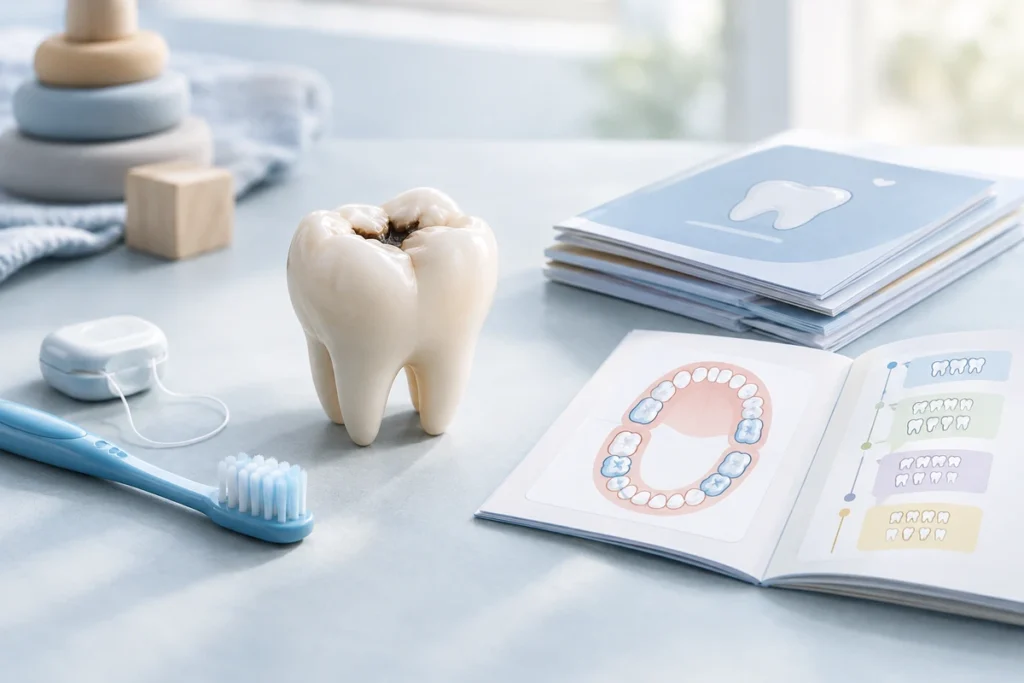
Do My Baby’s Teeth Cavities Need Filling if They’re Going to Fall Out Anyway?
Yes, baby teeth with cavities need fillings because untreated decay spreads quickly, causes infections, pain, and can damage the growing permanent teeth below. What is normal at your child’s age, and what needs a dentist, is in our Complete Children’s Oral Health System for Parents.





Why the Baby Molars Are the Real Worry
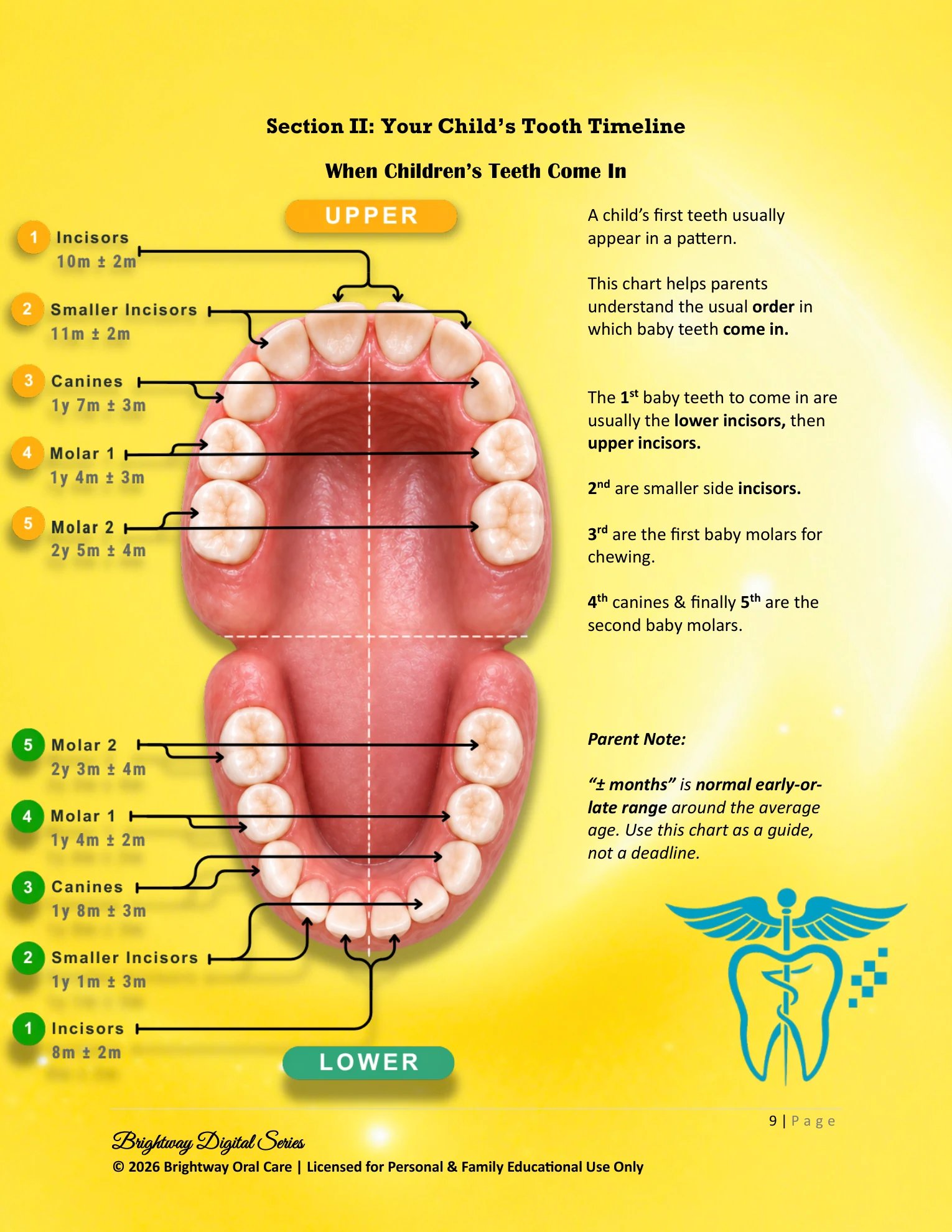
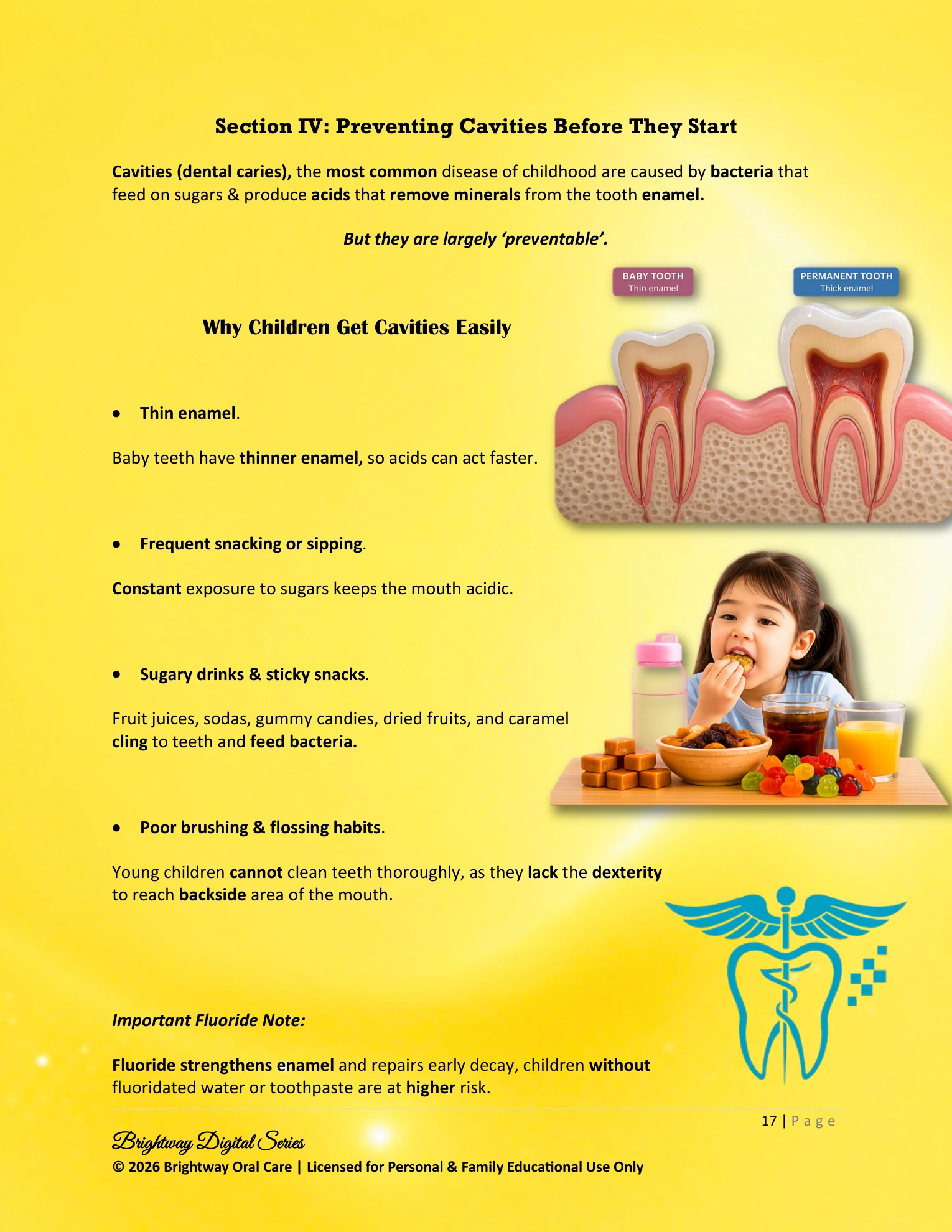
The baby teeth most likely to need work are usually molars, and they come out around 10 to 12 years.
Baby teeth fall out in a specific order, although children may vary as individuals. Baby teeth hold the space for the permanent adult teeth, guide them into proper position, and let your child chew and speak properly.
Baby molars are the last to go, so a cavity in a 5-year-old’s baby molar is not sitting in a tooth that falls out soon. It still has years of work left to do.
The Permanent Tooth Most Mistaken for a Baby Tooth
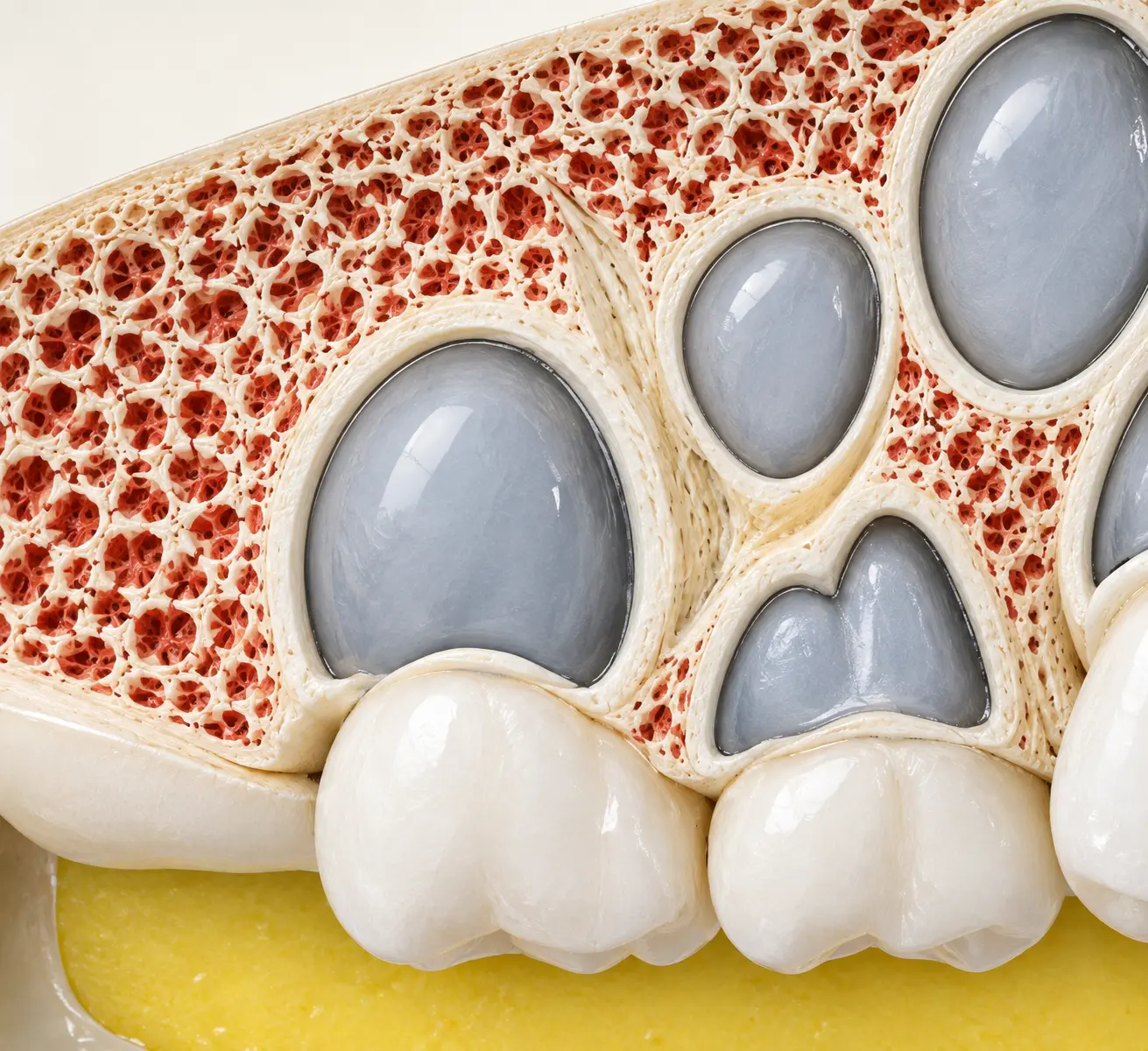
The 1st permanent molars come in at about 6 years of age, and come through behind the baby molars, without any baby tooth falling out first.
A lot of parents never realise they have arrived, and they are also the teeth most likely to get a cavity, because they sit right at the back and they are harder to clean.
The Only Real Variable Is the Child
The cavity itself is not up for discussion. It needs the filling. What varies is whether the child can sit through the appointment.
Under 3 is the hardest age, because a very young child has no reason to hold still for a stranger doing something to their mouth. The limit is cooperation, and that is a separate problem from the tooth.
What I Do When a Child Cannot Manage It
I don’t encourage forcing it, because a child who fights learns to dread every appointment after.
Some child encouragement tips for parents are:
- Never use the dentist as a threat. No “if you don’t brush, the dentist will drill your teeth.” This creates a lasting fear of us.
- Make it a friendly situation, like counting or taking pictures of teeth.
- Practice at home. Let them open wide, count their own teeth, and play at being the dentist.
- Praise the small things, like opening their mouth and sitting still longer.
Most children can manage the appointment the 2nd or 3rd time.
FAQs
Can cavities in baby teeth affect the permanent teeth?
Yes. Untreated cavities can cause pain, infection, early tooth loss, and spacing problems that affect the coming adult teeth.
My child has no pain, so is it fine to leave it?
No. Pain is a late sign, and most parents think children only need dental care once they complain, but by the time a young child is in pain, the problem is usually already advanced.
At what age do the back baby teeth come out?
Around 10 to 12, though children vary.
My child will not open their mouth at the dentist. What now?
That is common, and usually means trust between the dentist and children needs to be built up rather than pushed through.
Knowing What Is Normal for Their Age
Most of it comes down to knowing what is normal at your child’s age, and our Complete Children’s Oral Health System for Parents is designed for this. Get yours today, with a free gift.
If you have facial swelling, fever alongside tooth pain, pain spreading towards your eyes or neck, trouble swallowing, or limited mouth opening, contact your dentist and seek urgent care immediately.