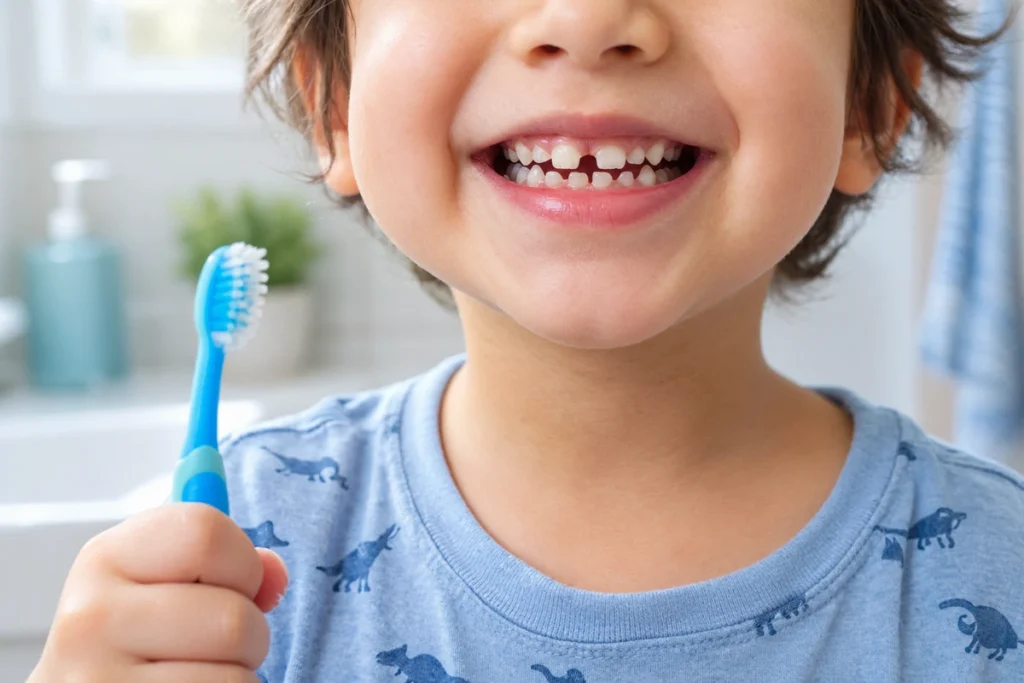
Are Gaps Between My Child’s Baby Teeth Normal?
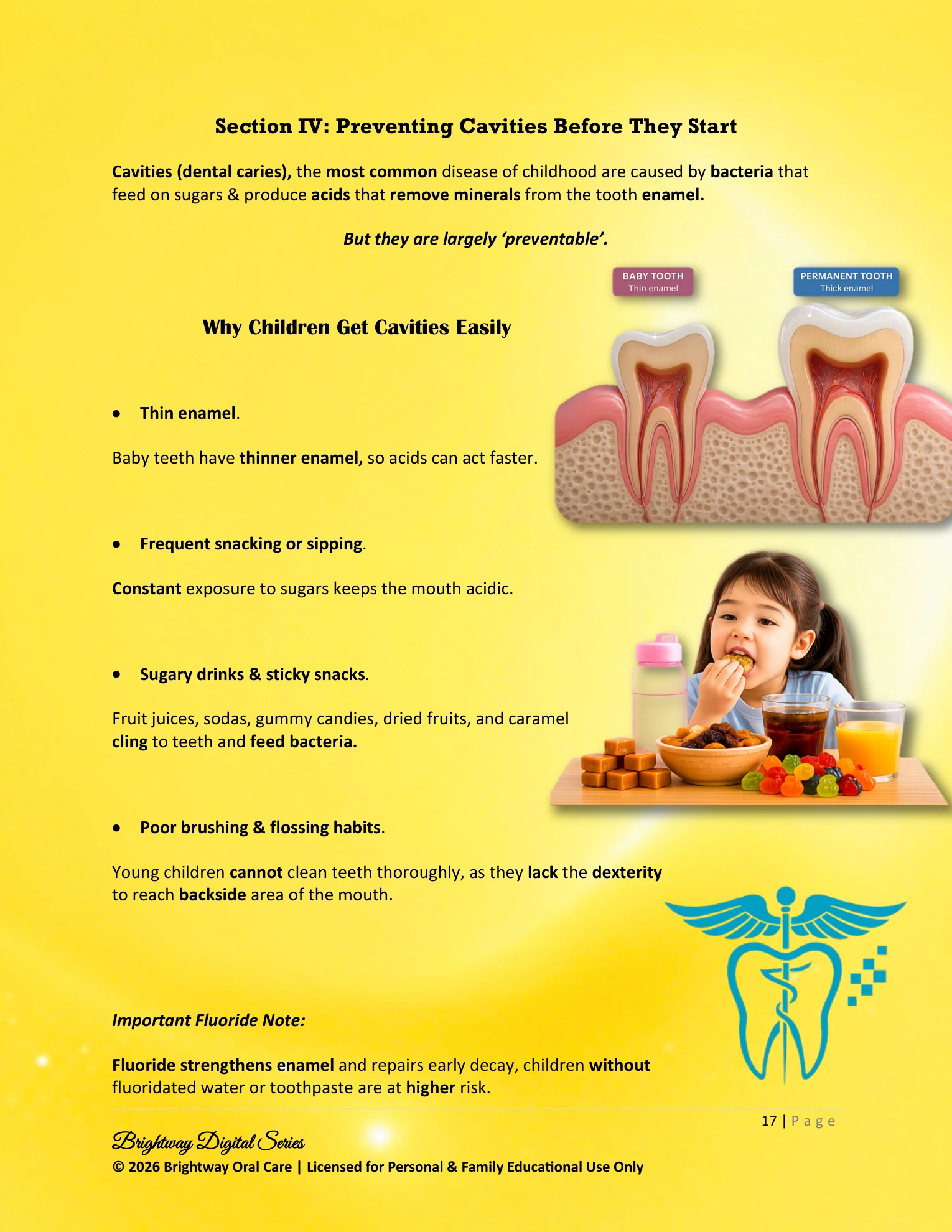
Yes, gaps between baby teeth are not only normal, but usually a good sign; however, there is still a limit to what sort of gap is considered normal. Baby teeth are smaller than upcoming adult teeth, so the space fills normally, without causing crowding in the future. That said, where that limit sits, what is normal at each age, and what needs a dentist, are explained in detail in our Complete Children’s Oral Health System for Parents.





Why the Gaps Are a Good Sign
The adult teeth that replace baby teeth are bigger in size, so the spaces between them are not a flaw; they are the room the bigger adult teeth will need when they come through.
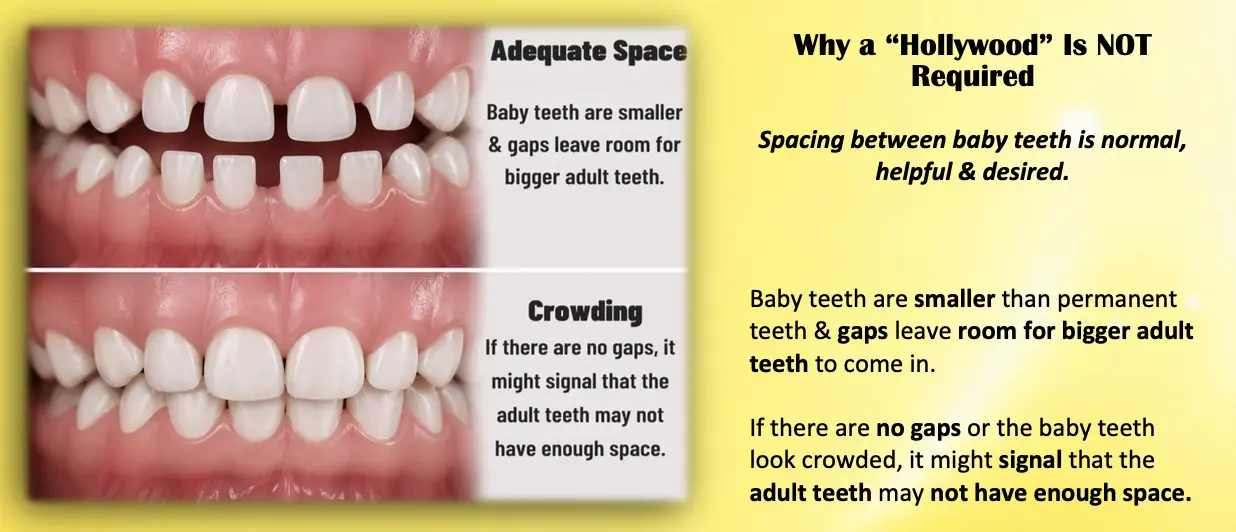
Why a Hollywood Smile Is Not the Goal for a Child
A lot of parents picture a child’s smile the way adult smiles look in films: straight, tight, no spaces, and the specific term “Hollywood Smile” is used to explain this; for a young child, that might be an invitation to future adult teeth crowding.
Baby teeth that sit tight against each other with no gaps at all can mean the adult teeth may not have enough space when they arrive.
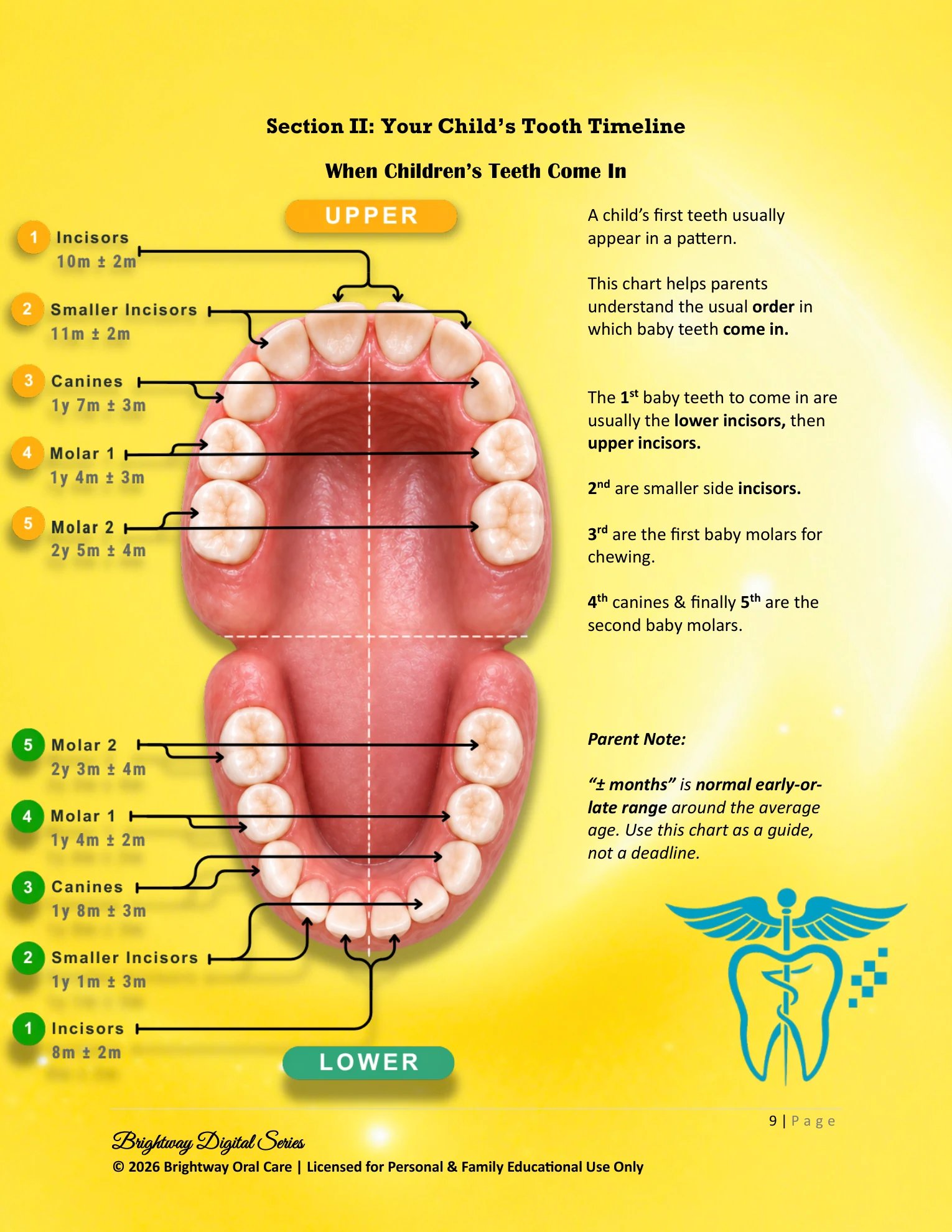
No Gaps Is Actually the Real Problem to Get Checked
If your child’s baby teeth have no gaps, or already look crowded or overlapping, it is worth an early check at the orthodontist. It does not mean something is wrong, but it can point to future crowding once the adult teeth come in.
An orthodontic check around age 7 is a useful time, because by then enough adult teeth have started coming in to see how things are developing.
When These Gaps Are Not the Good Kind
Not every kind of gap in teeth is considered good either, because some detrimental habits, if they carry on too long, can push teeth forward and open up spaces, causing orthodontic treatment that otherwise could have been prevented.
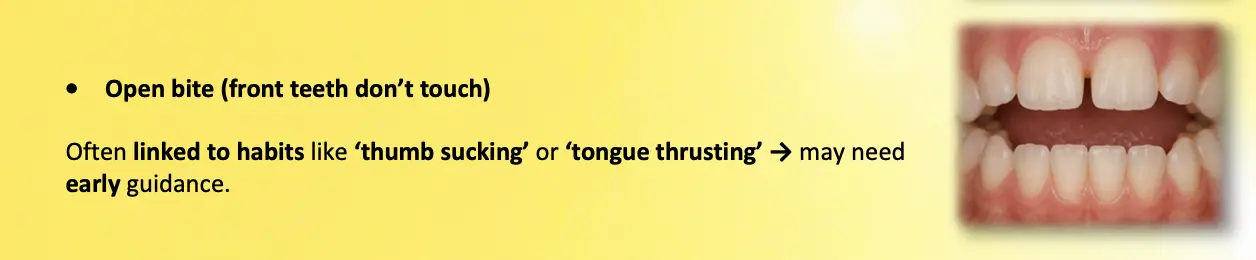
- Thumb sucking or a pacifier after about 3 – 4 years of age, even though it is common in young children; this habit, long-term, can push teeth forward and change how the mouth closes.
- Tongue thrusting: when the tongue pushes against the teeth during swallowing or speaking, which over time can lead to spacing in the front teeth of the upper jaw.
If the front teeth don’t meet when your child bites down, it’s best to mention it at the next dental visit.
FAQs
Should I worry if my child’s baby teeth touch each other?
Not on its own, but baby teeth with no gaps can mean the adult teeth may be short on space later, and it’s worth mentioning at the next dental visit.
Will the gaps close on their own?
When baby teeth fall out, the bigger adult teeth that replace them use that space.
When should my child see an orthodontist?
Age 7 for the first orthodontic screening, because enough adult teeth have started coming in to spot developing problems early.
Can thumb sucking cause gaps?
It can, if it continues beyond age 3 – 4, so it’s best to work on stopping the habit by then.
What Is Normal for Their Age
Most of this comes down to knowing what is normal for your child’s age, and our “Complete Children’s Oral Health System” is designed for parents to understand exactly this.
If you have facial swelling, fever alongside tooth pain, pain spreading towards your eyes or neck, trouble swallowing, or limited mouth opening, contact your dentist and seek urgent care immediately.