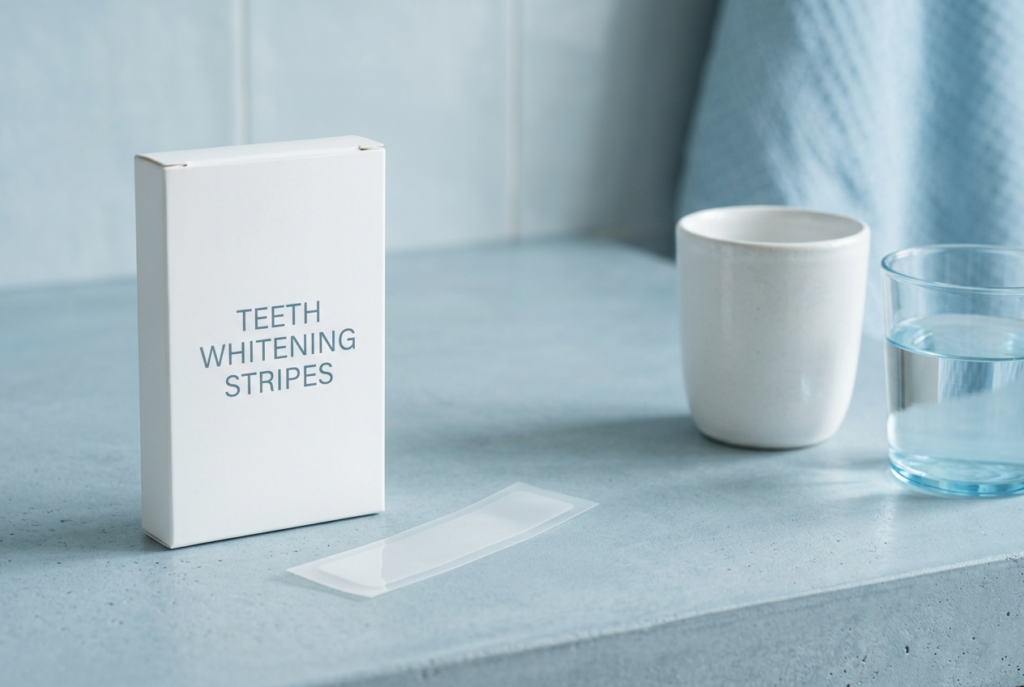
Tooth Sensitivity After Whitening Strips? Here Is What Is Happening
If you’ve ever had sensitivity or pain in your teeth after using whitening strips, it’s because of H2O2 (Hydrogen Peroxide). It can react with the nerve/pulp layer in your tooth.

How Can H2O2 Make Teeth Sensitive?
The problem is, most people think of whitening strips like a stick-on that will lift the stains, or a coat of paint, but that’s not actually true.
H2O2 is small enough to pass through enamel and into the layer underneath called “dentine,” as it doesn’t stop at the surface; that’s the whole reason strips work in the first place.
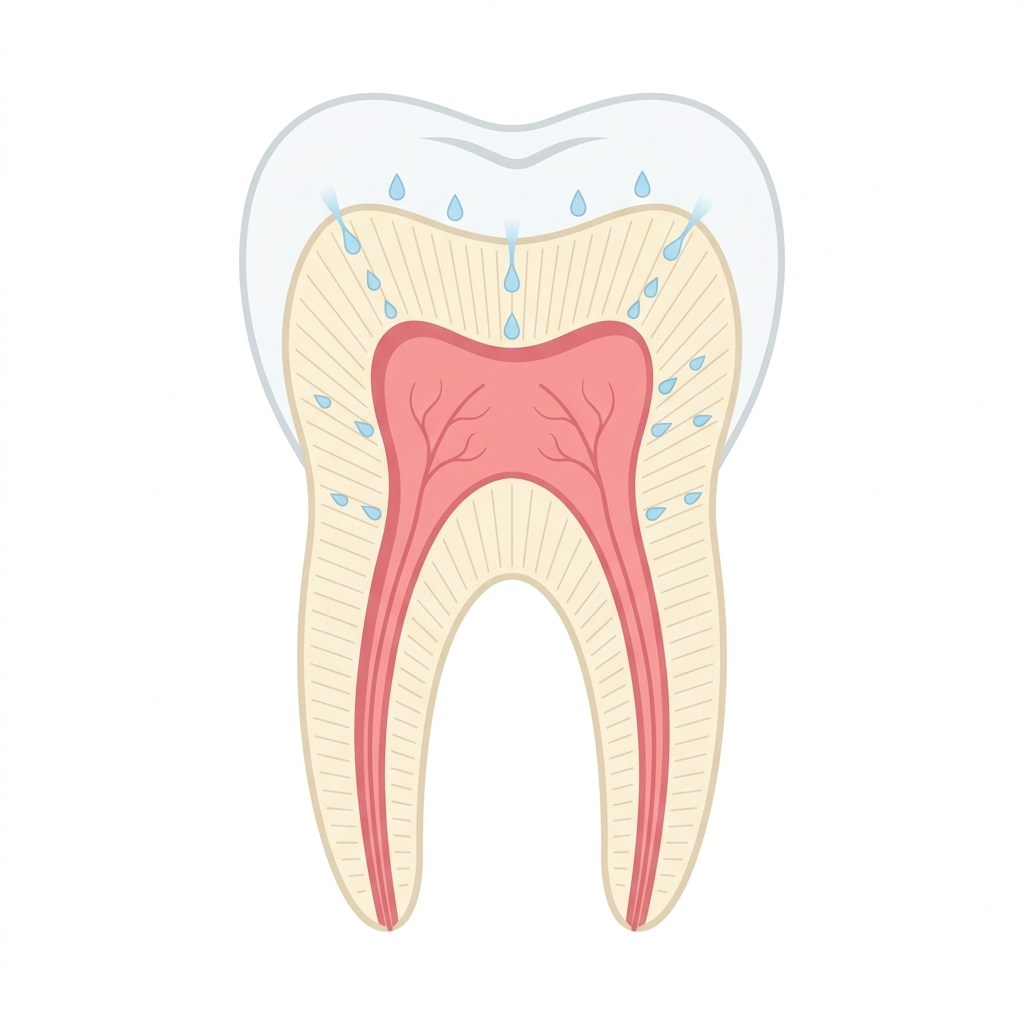
When it goes beyond dentine, into the nerve (pulp), it reacts, and the pulp gets inflamed, causing that sharp sting that people call sensitivity, and for most people, it usually settles within a day.
And this mostly isn’t permanent damage, but a reaction, and research shows at-home whitening carries a risk of sensitivity in roughly 2/3 of users.
Why it Hurts More for Some People than Others?
2 people can use the same strips and have completely different experiences. One feels nothing at all, while the other person feels stings from cold water.
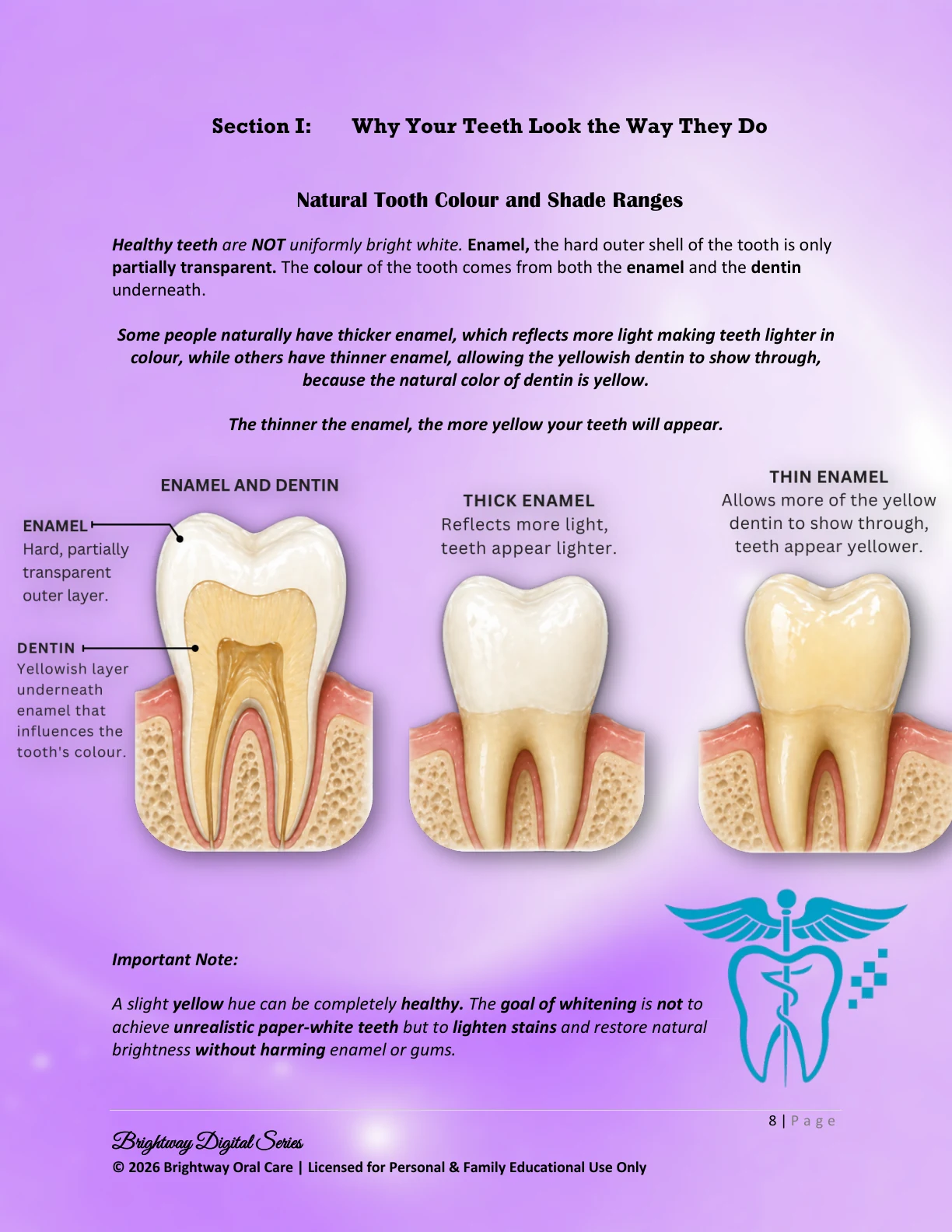
The difference is usually how far the peroxide has to travel to reach the nerve, because enamel is not the same thickness across a single tooth and also differs between people.
Some are simply born with more of it than others, and that is genetics at play, and enamel thins with age as well.
The Patient Who Came in Asking for Stronger Whitening
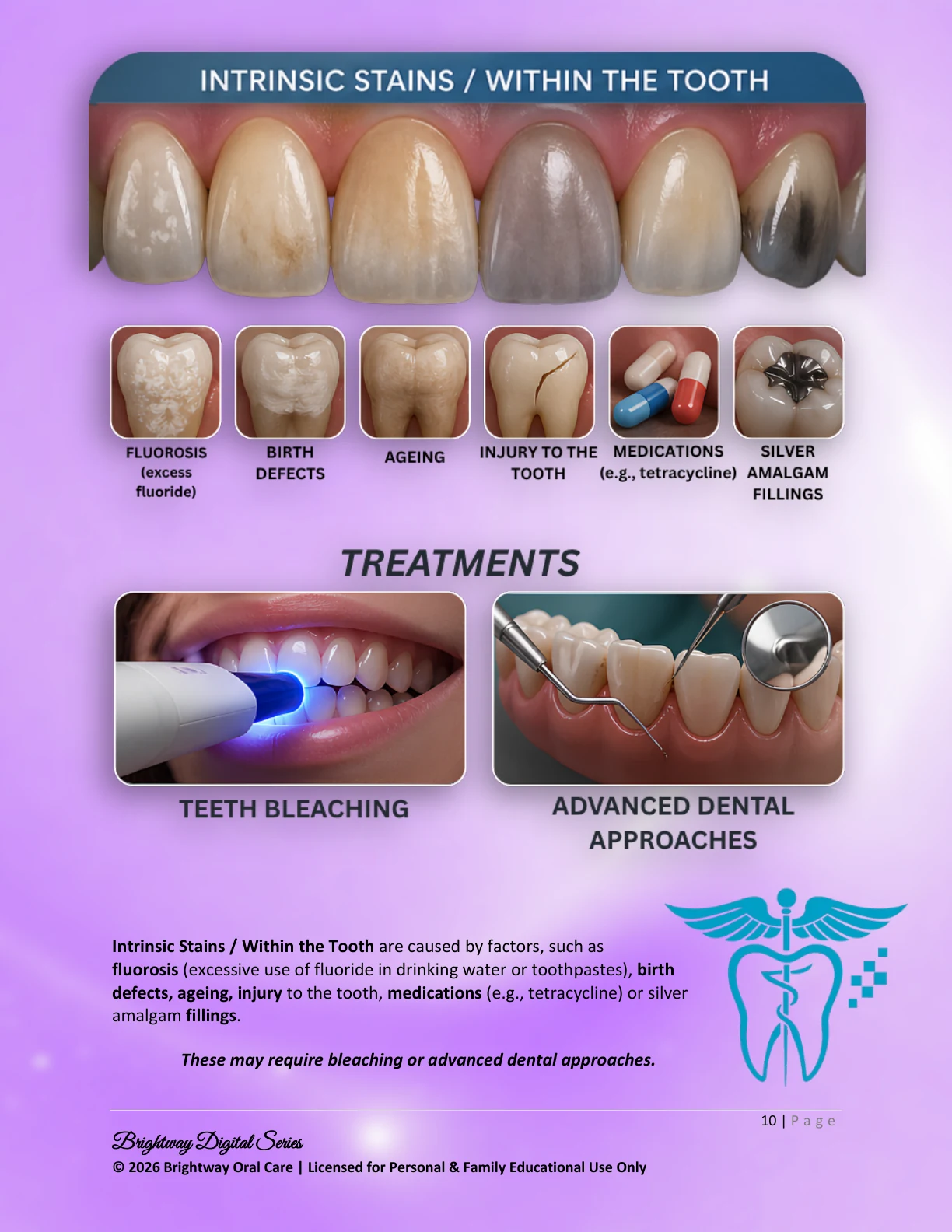
A patient came to me convinced she needed a stronger product, and had worked through several boxes of strips, while her front teeth still carried white patches that would not change.
She thought them to be stains too stubborn for a home kit, and apparently they were not stains at all.
What she had was mild fluorosis, and those white flecks were laid down while her teeth were still forming, years before she ever bought a strip.
No whitening product removes them, because nothing is on the surface to remove, and it required a different approach to her treatment.
She didn’t know, and the box didn’t tell her either.
Why Did These White Spots Look Worse After Using Whitening Strips?
What kept her buying strips again and again was the fact that H2O2 dries the tooth and made those patches look even brighter. So every round of strips made the exact thing she disliked stand out more.
She apparently needed a completely different plan, in fact, a much gentler approach.
No strips, or anything that made her teeth sensitive. The conservative option was the best, because the problem was never what she thought it was.
What Actually Decides Whether Whitening Suits You
3 things & none of them are printed on a box.
- The kind of discoloration you have decides if it responds to peroxide or not.
- How much enamel you are working with, which changes both how much sensitivity you get and how long you should be wearing anything.
- Whether any prior dental treatment in your mouth rules a method out.
Get those right and whitening is usually straightforward. Get them wrong and you spend money on the wrong product.
FAQs
How long does whitening sensitivity last?
For most people, it gets better in about a day. If it gets worse after several days, then it’s no longer from just peroxide.
Can whitening strips damage tooth enamel?
Not if used as directed. The problem starts when people use them more often, or for longer, than the box says.
Should I stop or keep going if my teeth hurt?
Stop. Continuing can worsen sensitivity, and the H2O2 is too much for your teeth right now.
Stop Guessing Which Product is Right for You
Every strip on the shelf is sold on the same promise, and none can tell you if it’s even the right choice for you.
Stop guessing and wasting money on random products.
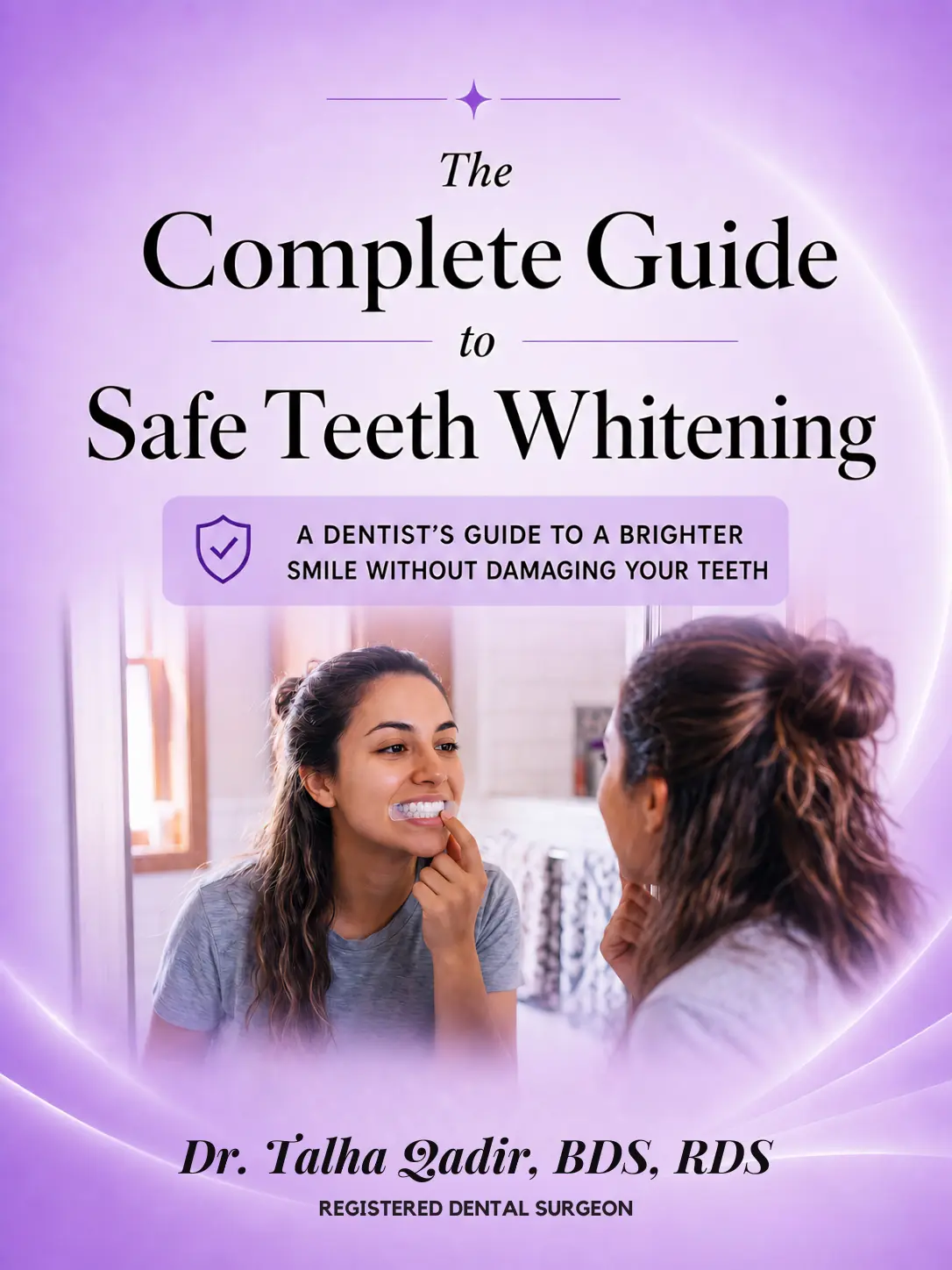
The Complete Teeth Whitening System is designed by a dentist to give you a personalized score on what method will actually work for your smile safely.
If you have facial swelling, fever alongside tooth pain, pain spreading towards your eyes or neck, trouble swallowing, or limited mouth opening, contact your dentist and seek urgent care immediately.