
Why Does My Tooth Hurt Months After a Dental Filling?
Tooth pain months after a filling usually means the seal around your dental filling has become faulty, and saliva, along with bacteria, seeps back in to start decay again. There are other reasons a tooth can do this, and they are explained in The Complete Tooth Sensitivity System.





The First Few Weeks Are a Different Problem
A tooth can feel odd for a short while after a filling, and a little cold sensitivity with a bite that feels high usually settles in a day or two.
However, months later, after the filling has settled in and the tooth starts hurting, something has changed.
What Usually Changes Under a Filling
A filling is a seal that closes the space where decay was removed, and it has to hold against a wet mouth, chewing forces, and temperature swings every day, for years.
Seals don’t hold forever, and when the edge of a filling gives way, saliva gets underneath it, and bacteria travel in with the saliva. Decay starts again in the same tooth, in a place a toothbrush cannot reach and you cannot see. This happens whatever the filling is made of, because the gap at the edge is what lets the saliva in, not the material itself.
Why It Can Take Months to Hurt
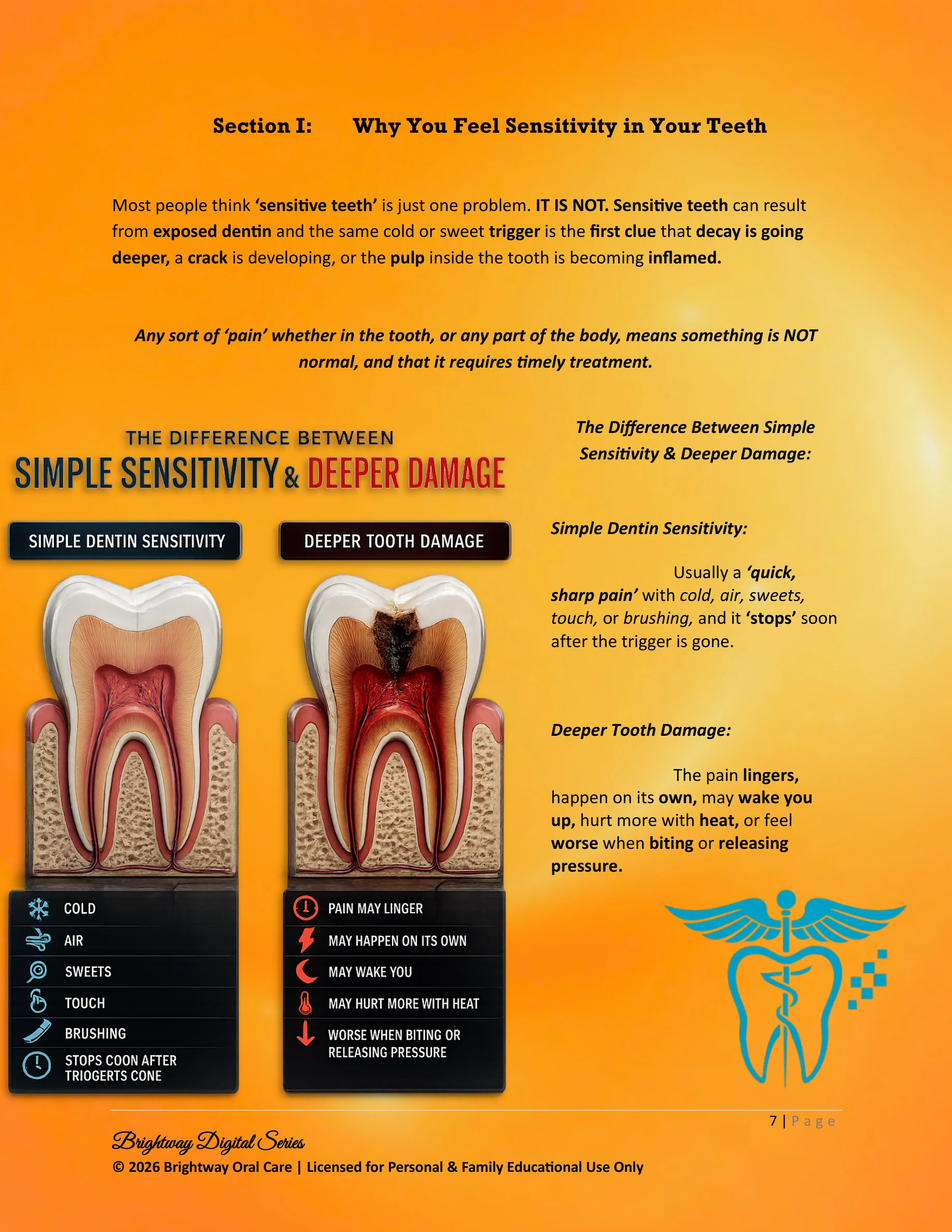
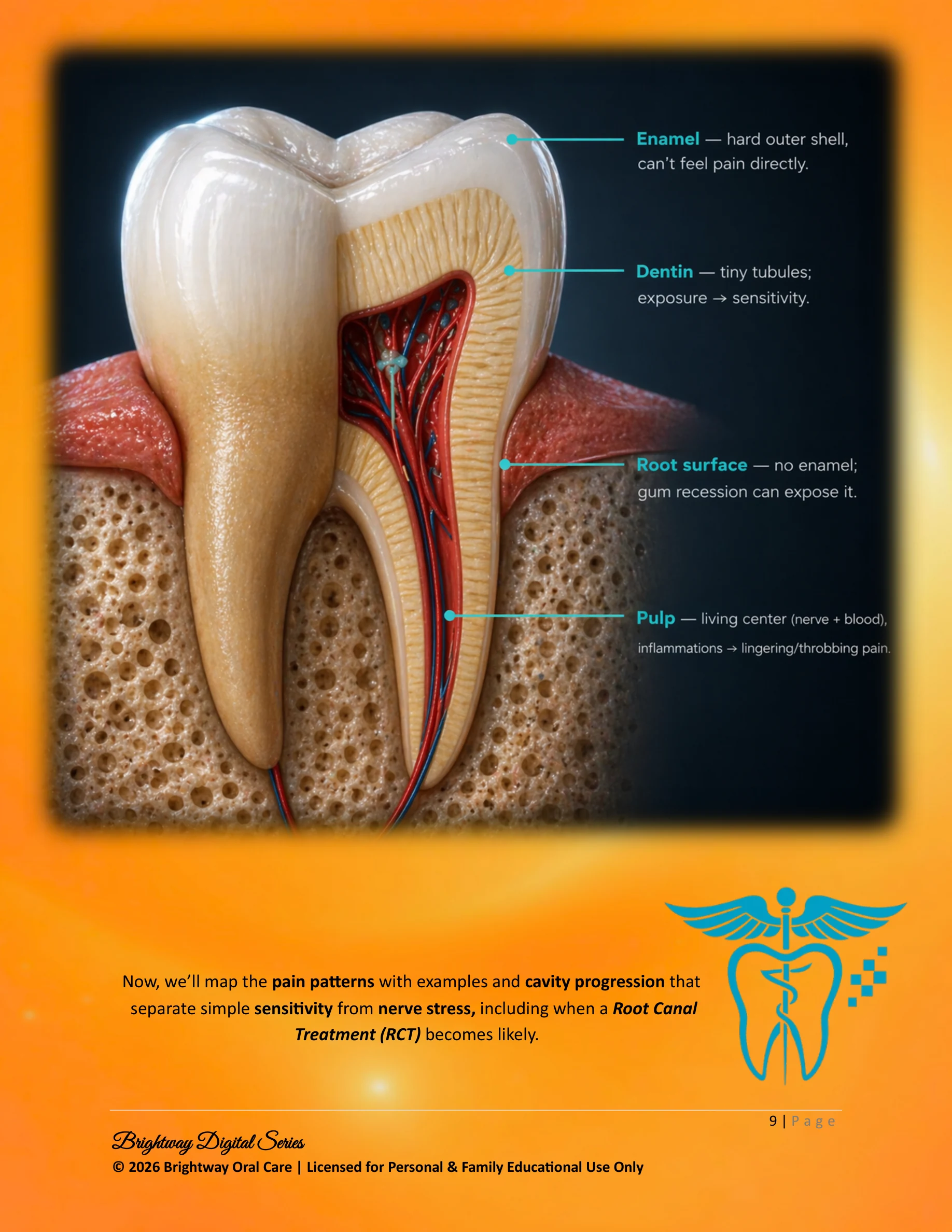
Decay under a filling is quiet. It sits in the layers of the tooth that do not report pain, hidden under the filling, so nothing looks wrong from the outside.
The pain arrives later, when the decay reaches the living center of the tooth. By that point, the pulp beneath has been dealing with it for a while.
That is why the tooth can feel fine for months and then start hurting over a few days.
What the X-ray Shows
This is why the radiograph matters more here than anything the patient can describe.
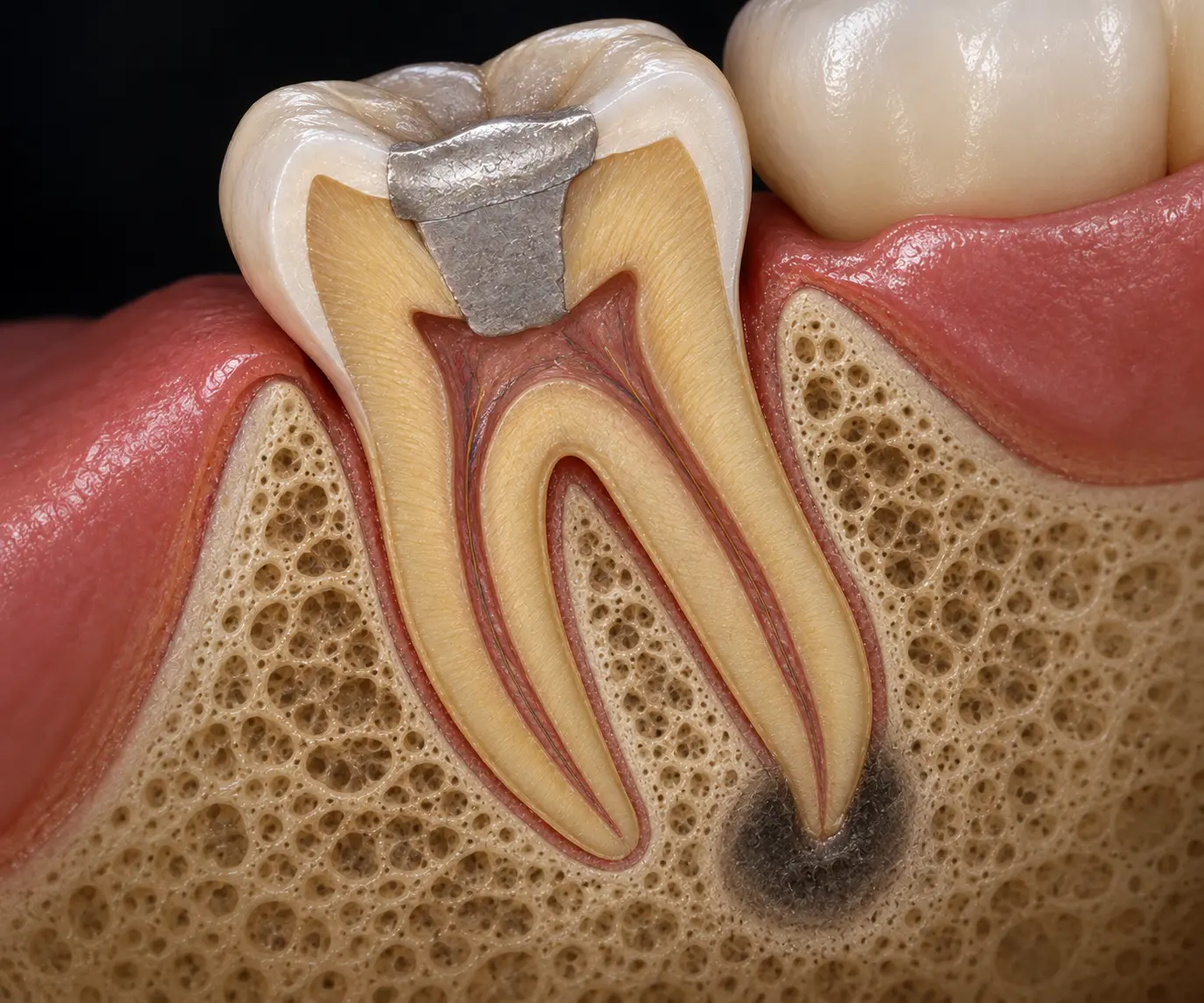
In these cases, the film almost always shows the cause. Either the line around the root looks wider than it should, which is the ligament around the tooth reacting. Or there is a dark patch at the very tip of the root, which means the infection has been there long enough to change the bone around it.
What Happens Next
What happens next depends on the clinical condition of the tooth, and that is your dentist’s call. Depending on what the tooth looks like and what the X-ray shows, the options can include a new filling, pulp therapy, a root canal, or removing the tooth.
FAQs
Is it normal for a filling to hurt months later?
Short-term sensitivity after a filling is common, but pain that starts months later is worth getting checked.
Does this mean my dentist did the filling badly?
Not on its own. Fillings are sealed against a wet mouth under daily force, and seals have a working life.
Can I wait and see if it settles?
If the pain occurs months later, it’s probably best to get it checked as early as possible.
Will it show on an X-ray?
In cases like this, the film almost always shows either a widened ligament space or a dark area at the root tip.
Reading the Pattern
Tooth pain has a pattern, and the pattern is readable once somebody shows you how to read it. That is what The Complete Tooth Sensitivity System is designed for.
If you have facial swelling, fever alongside tooth pain, pain spreading towards your eyes or neck, trouble swallowing, or limited mouth opening, contact your dentist and seek urgent care immediately.